
Commerce
Can Dropshipping Become Passive Income? What a Managed Ecommerce Model Actually Looks Like
Explore dropshipping passive income claims, the real operational workload, owner oversight and how a managed ecommerce partnership can reduce daily involvement.

Dropshipping passive income sounds appealing, but the business is not automatically passive. Research, pricing, stock monitoring, order management, supplier coordination, customer service and account health require active attention. Removing your own packing table does not remove those responsibilities.
A managed ecommerce model changes who performs agreed tasks. An operating team can reduce the owner's daily workload considerably, while the owner remains involved in resources, oversight and important decisions. The useful distinction is between delegated operations and a business that supposedly needs no work.
Is dropshipping passive income or an operating business?
The business has to attract buyers, offer suitable products, arrange compliant fulfilment and resolve problems. Even a smoothly delivered order depends on earlier decisions about supply, product information, availability, pricing and service promises.
Automation can perform repeatable actions. It cannot establish whether every supplier is suitable, resolve every unusual return, or make every commercial decision responsibly. A price rule can change a listing; a person still needs to decide whether the rule is sensible and whether its inputs remain accurate.
A more useful goal is lower owner involvement supported by active management. That is different from effortless money, predictable earnings or eliminating business risk.
Want ecommerce exposure without turning it into a second full-time job? See how Pesa Vesa Commerce works, including the responsibilities that remain with the owner.
What work sits behind an ecommerce order?
Before the sale, someone researches demand, checks product restrictions, evaluates suppliers, prepares accurate listings and assesses costs. During the sale, someone needs a process for stock changes, accepted orders and dispatch confirmation. Afterward, someone monitors delivery, answers buyers, handles returns and reconciles what the order actually contributed.
An order with no visible problem can conceal a process weakness. A team that relies on one person's memory may struggle when that person is unavailable. A supplier with frequent stock inaccuracies can consume more time than the original product margin justifies.
Operational work therefore includes preventing exceptions as well as responding to them. The aim of a managed model is to create a dependable routine with ownership, records and escalation rules.
DIY dropshipping versus a managed ecommerce partnership
The work exists in both arrangements. What changes is who performs it and how the owner oversees it.
| Area | DIY dropshipping | Managed ecommerce partnership |
|---|---|---|
| Product research | Owner investigates demand, restrictions and costs | Team researches within an agreed product strategy |
| Listings | Owner creates and maintains accurate offers | Team prepares and reviews agreed listings |
| Order management | Owner monitors acceptance, dispatch and exceptions | Team coordinates the agreed order workflow |
| Supplier coordination | Owner follows up on stock and fulfilment | Team manages routine communication and escalations |
| Customer support | Owner responds and resolves issues | Team handles authorised service workflows |
| Account monitoring | Owner reviews alerts and performance | Team monitors and reports; owner retains oversight |
| Time involvement | Owner covers operating work and decisions | Owner reviews reports, resources and important decisions |
| Expertise required | Owner develops practical operating skills | Team contributes skills; owner must understand enough to govern |
A table cannot replace a written scope. Two providers using the phrase managed dropshipping may offer very different coverage. Check service boundaries, permissions, reporting and what happens when someone needs an urgent decision.
What can be delegated, and what remains yours?
Routine research, listing preparation, order follow-up and support coordination can be assigned to an operating team. Establish what the team may decide independently, what requires approval and how actions are recorded.
The owner should retain appropriate account ownership and access, visibility into payouts and costs, and the authority to make important business decisions. Verification, required legal information and funding approvals cannot simply be wished away. Obligations depend on the actual business and marketplace.
Delegation works best when approval rules are specific. A team should not have to pause every minor adjustment, but it should not make major commitments outside its authority. Agree the kinds of decision that require the owner, their urgency and an alternative contact or pause procedure when the owner is unavailable.
For a practical oversight framework, read eBay dropshipping for busy professionals.
What cannot be eliminated by professional management?
Capital is still committed to a business. Supplier payments, refund needs and payout timing can create cash pressure. Demand and costs can change. Suppliers can fail to dispatch correctly, accounts can encounter restrictions and products can face stronger competition.
Management can improve how these conditions are monitored and handled; it cannot promise that they never occur. Business profit is also different from a partner's individual earnings. Neither should be inferred from sales revenue alone.
A useful proposal explains operational controls and limits, rather than replacing uncertainty with a fixed earnings claim. Ask what assumptions underpin the plan and which conditions would lead to a pause or change of direction.
Prefer to assess the fit before committing? Book a Commerce conversation about your available time, capital planning and the decisions you want to retain.
Compliant supply matters more than convenience
For eBay, the official dropshipping policy permits wholesale-supplier dropshipping. It prohibits listing an item and then purchasing it from another retailer or marketplace for that retailer to deliver directly to your customer.
A managed team cannot make a prohibited sourcing arrangement compliant simply by operating it on your behalf. Ask how the actual supplier relationship supports the marketplace's rules. The seller remains responsible for delivery performance and buyer satisfaction.
Our eBay dropshipping income guide explains the supply-to-customer workflow. If expansion is proposed, treat each marketplace as a separate policy review. Amazon's dropshipping policy, for example, requires you to be identifiable as the seller of record and does not permit another retailer's identity to appear in the prohibited ways on customer-facing fulfilment materials.
Define an oversight routine that fits your lifestyle
Start with the decisions you can realistically make. Can you respond to an important escalation? Will you review financial and account information? Is your available capital separate from money needed for essential obligations?
Agree a reporting rhythm and an exception channel. Routine reports should explain sales, actual costs, cash movement, returns, supplier issues and account health. An urgent delivery or compliance problem should not wait for the next scheduled report.
Review reports for decisions, not just attractive totals. If returns rise, ask which products or causes explain the change. If available cash falls despite recorded sales, check supplier payments, pending payouts and refund commitments. A low-touch owner still needs visibility into the business.
How Pesa Vesa fits the model
Pesa Vesa Commerce offers a conceptual partnership around agreed operating responsibilities, including research, listings, order coordination, customer-service workflows, monitoring and reporting. The aim is to reduce the owner's daily operating burden while keeping essential decisions and financial visibility clear.
The scope should follow the business and the owner's circumstances. It should not depend on confidential arrangements being disclosed publicly or on a promise that every enquiry will be suitable. Read about Pesa Vesa and use the consultation to examine how the operating model would work for you.
Frequently asked questions
Can dropshipping ever be completely hands-off?
An owner can delegate many tasks, but the work still happens somewhere. Oversight, resources, approvals and marketplace responsibilities remain. A managed model should explain the owner's role rather than claim that involvement disappears.
Does automation replace an ecommerce operating partner?
Not entirely. Software can support monitoring and routine actions, but people need to evaluate suppliers, interpret problems, apply policy and decide how to respond. Tools and a responsible team serve different purposes.
What reports should a managed ecommerce owner receive?
Request clear information on orders, costs, payouts, available cash, returns, supplier exceptions and account health. Agree definitions so revenue is not presented as net profit or as a personal payout.
Is the model suitable if I cannot make any business decisions?
That would require careful reconsideration. Managed operations reduce routine tasks, but a business still needs someone with authority to oversee it, provide required resources and make significant decisions.
Choose delegation with visibility
The credible proposition is a business with a reduced day-to-day operating burden, supported by a team and transparent controls. It is not a shortcut that removes work, capital requirements or uncertainty.
Want ecommerce involvement with an operating team behind it? Explore the Pesa Vesa Commerce model and start a conversation about your circumstances.
Keep exploring.

How Much Work Does eBay Dropshipping Really Require? DIY vs Managed Ecommerce
Compare an eBay dropshipping business task by task: research, suppliers, listings, orders, returns, account health and DIY versus managed operations.
Read Article
eBay Dropshipping for Busy Professionals: Building an Ecommerce Business Without Managing It Full-Time
A practical eBay dropshipping for beginners guide for busy professionals: delegated operations, owner control, financial visibility and realistic expectations.
Read Article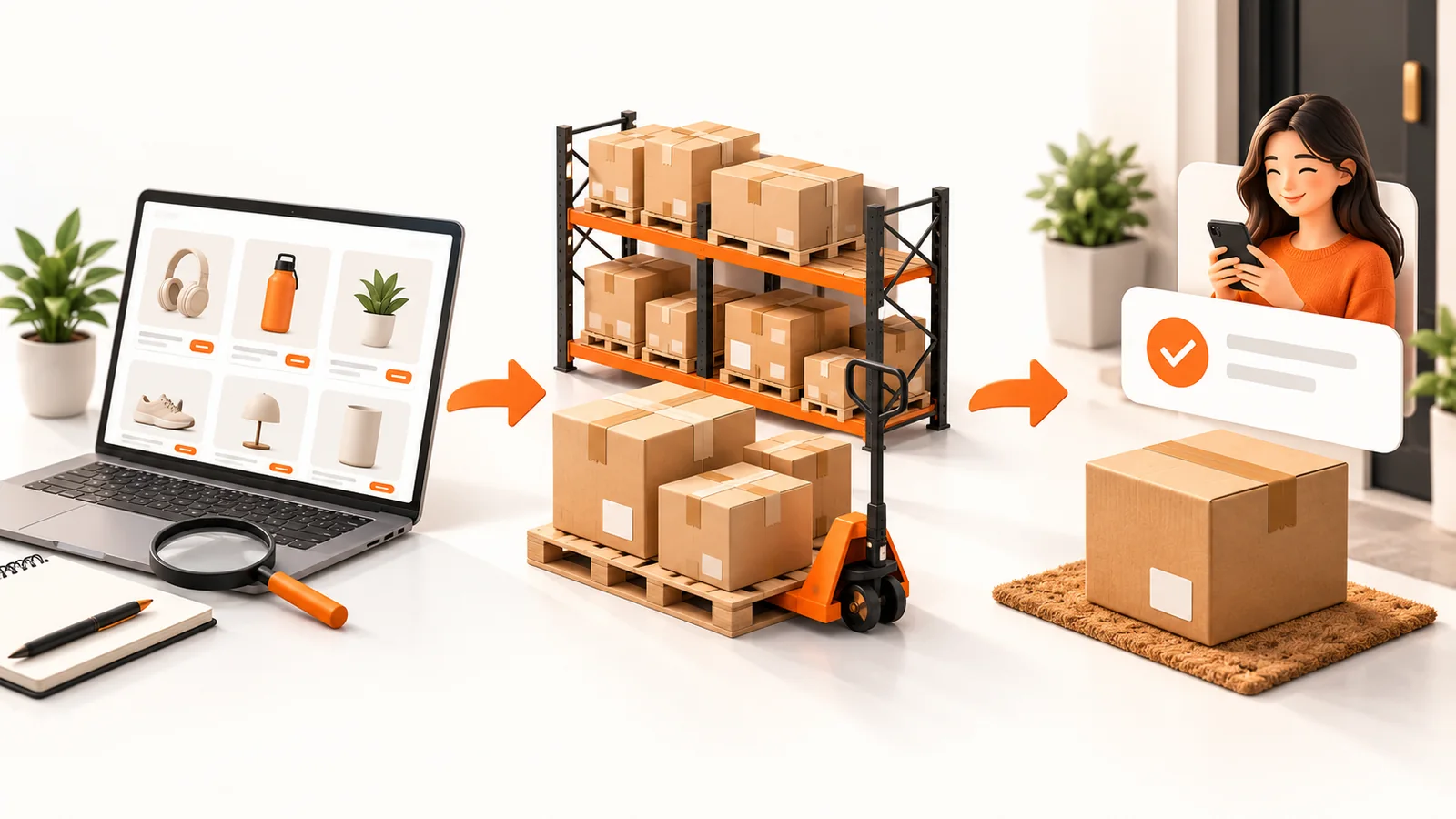
eBay Dropshipping in 2026: How to Build a Low-Touch Ecommerce Income Stream
Understand eBay dropshipping, wholesale-supplier rules, seller responsibilities and managed operations before exploring an ecommerce income stream.
Read Article